What Makes Tapioca Starch Organic? A Complete Guide
Have you ever wondered why two packets of tapioca starch look exactly the same, yet one is labelled organic while the other is not? After all, both are white, powdery and extracted from cassava roots. So, what exactly makes one different from the other?
Well, the answer lies in how the cassava is grown, processed and handled before reaching your kitchen or food manufacturing facility.
Today, organic tapioca starch is becoming a preferred ingredient for food manufacturers looking for organically sourced, plant-based alternatives to conventional starches. But there is more to this ingredient than its organic label.
In this guide, we will explore what makes tapioca starch organic, how it is produced and why choosing a trusted supplier like Pure Life Organic Foods matters.
First, What Exactly Is Tapioca Starch?
Before understanding its organic characteristics, it is important to know what tapioca starch actually is.
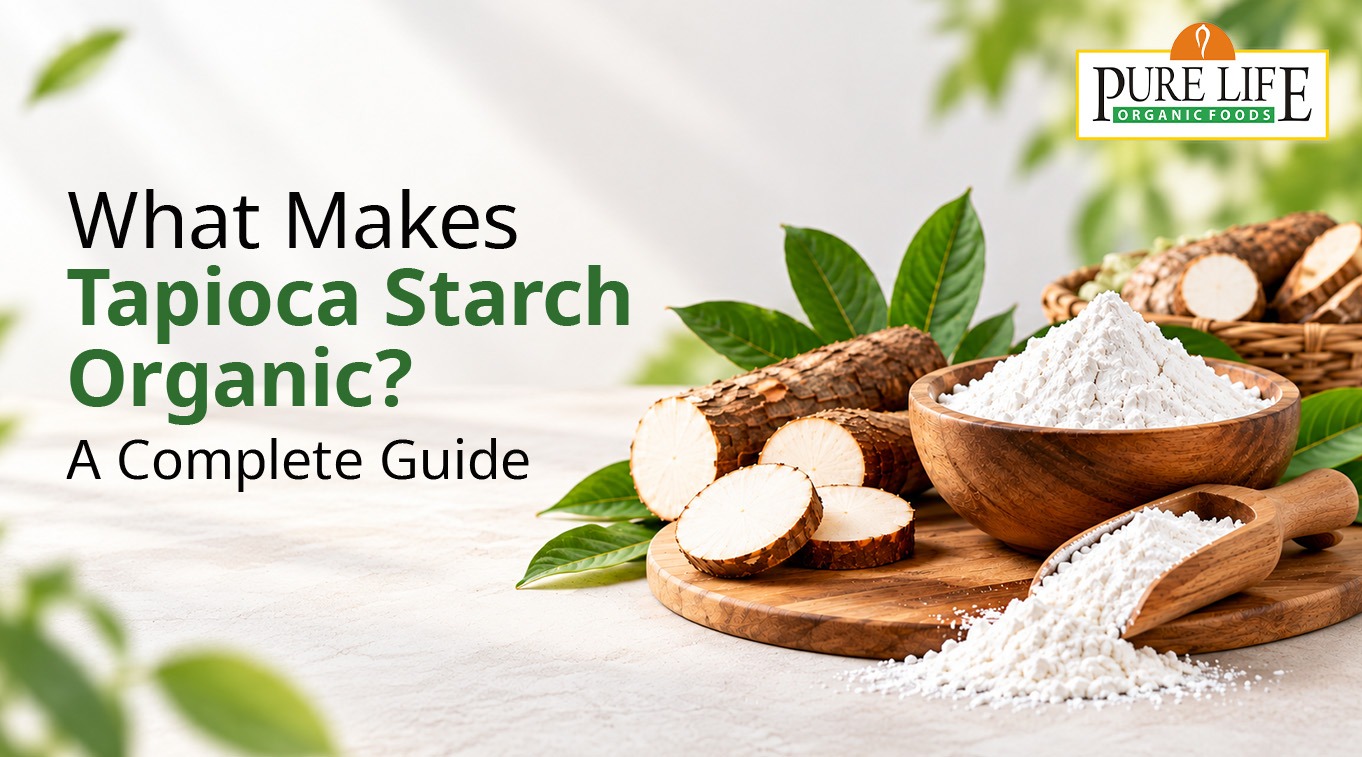
Tapioca starch is a fine, white powder extracted from the roots of the cassava plant, scientifically known as Manihot esculenta. It is commonly used to thicken sauces, improve the texture of baked goods and provide consistency in processed foods.
One of its biggest advantages is its neutral flavour. Unlike certain other ingredients, tapioca starch does not introduce a noticeable taste that could interfere with the original recipe.
Pure Life Organic Foods offers tapioca starch sourced from organically certified cassava farms, making it suitable for food businesses looking for organic ingredients.
What Makes Tapioca Starch Organic?
Suppose you have two cassava farms. One follows conventional agricultural practices, while the other follows approved organic farming standards.
Although both farms cultivate the same crop, their methods of production can differ significantly.
Organic farming restricts the use of most synthetic pesticides and fertilisers. It also prohibits genetically modified organisms under recognised organic standards.
For tapioca starch to qualify as organic, the cassava cultivation and subsequent processing must comply with applicable certification requirements.
This is what separates certified organic production from simply growing cassava and extracting its starch.
It All Begins With Organic Cassava Farming
The journey of organic tapioca starch begins long before the cassava reaches a processing facility.
Farmers must follow approved agricultural practices designed to maintain soil health and manage pests without relying on prohibited substances.
For example, instead of depending on conventional synthetic fertilisers, organic farmers may use compost and other permitted soil amendments.
Similarly, crop rotation and biological pest management can help maintain favourable growing conditions.
Pure Life Organic Foods sources cassava from certified farms, supporting its commitment to organically produced food ingredients.
How Is Organic Tapioca Starch Extracted?
Once the cassava roots are harvested, the next step involves extracting the starch.
In a typical tapioca starch manufacturing process, the roots are thoroughly washed to remove soil and unwanted materials. They are then crushed or grated to release the starch.
The starch is separated from the fibrous material, purified and dried into a fine powder.
During organic processing, manufacturers must also follow applicable restrictions on processing aids and measures to prevent contact with non-organic materials.
The result is a versatile ingredient that can be incorporated into several food formulations.
Does Organic Certification Really Matter?
Imagine purchasing an ingredient labelled organic without knowing where it came from. How would you verify whether the claim is genuine?
This is where organic certification becomes important.
Certification provides a framework for assessing whether farms, processing facilities and supply-chain activities comply with recognised organic standards.
It also involves documentation and traceability requirements.
Pure Life Organic Foods states that it works with approved organic certification agencies and maintains systems for tracing products through its supply chain.
For commercial buyers, requesting current product-specific certification documents is an important part of confirming compliance.
What Makes Pure Life Organic Tapioca Starch Different?
Now that we understand organic production, let us examine the product itself.
Pure Life Organic Foods offers organic tapioca starch with specifications designed to support consistent food manufacturing applications.
Its product has a minimum starch content of 85%, maximum moisture content of 13% and maximum ash content of 0.20%.
The company also specifies a pH range of 4.5 to 6.5 when measured at 25°C using a 10% solution.
Another noticeable characteristic is its pure white appearance, making it suitable for formulations where maintaining the desired colour is important.
These specifications give manufacturers measurable parameters when evaluating the ingredient for their recipes.
Why Is Its Neutral Flavour Important?
Consider preparing a delicate vanilla pudding or a fruit-based dessert. Would you want the thickening ingredient to overpower its original flavour?
Probably not.
Tapioca starch has a neutral flavour, which allows other ingredients to remain prominent.
For example, when incorporated into cooked fruit fillings, it can provide thickness without introducing a strong competing taste.
This characteristic also makes Pure Life’s tapioca starch useful for soups, gravies and various sweet and savoury preparations.
Can Organic Tapioca Starch Be Used In Gluten-Free Baking?
Yes, and this is one of its most useful applications.
Cassava is naturally gluten-free, which means tapioca starch can be incorporated into gluten-free food formulations.
In baking, it helps influence texture, tenderness and chewiness when combined with suitable gluten-free flours.
For example, adding tapioca starch to a gluten-free bread mixture can help produce a softer, more elastic texture.
Pure Life Organic Foods supplies this versatile ingredient for bakery and other food manufacturing applications.
For products intended for people with coeliac disease, appropriate gluten cross-contact controls remain essential.
Is Organic Tapioca Starch Better Than Conventional Starch?
This is a question many buyers ask.
Both organic and conventional tapioca starch can perform similar functions in food preparation. The main distinction lies in the agricultural and processing standards followed.
Choosing organic does not automatically mean the starch contains fewer calories or carbohydrates.
Instead, its value comes from certified organic sourcing, compliance requirements and suitability for products marketed with organic ingredients.
For businesses developing organic food ranges, these characteristics can influence ingredient selection.
Why Choose Pure Life Organic Foods?
When purchasing ingredients for food manufacturing, quality specifications and sourcing information are important considerations.
Pure Life Organic Foods focuses on supplying organic ingredients while maintaining traceability and documented product standards.
Its tapioca starch combines a neutral flavour, pure white appearance and defined technical specifications with organically certified cassava sourcing.
Whether you manufacture gluten-free bakery products, sauces, gravies or desserts, choosing the right starch can influence the consistency of your finished products.
Make Organic Sourcing Part Of Your Ingredient Selection
So, what makes tapioca starch truly organic? It is not simply the white colour, fine texture or the fact that it comes from a plant.
It is the combination of certified organic agricultural practices, compliant processing methods and traceable sourcing.
With Pure Life Organic Foods, businesses can explore organic tapioca starch backed by published product specifications and the company’s commitment to organic sourcing.
Explore Pure Life Organic Foods’ tapioca starch range and discover an ingredient suited to your next organic food formulation.
FAQ
- How Can I Tell If Tapioca Starch Is Truly Organic?
Look for recognised organic certifications and traceable sourcing. Pure Life Organic Foods sources cassava from certified farms for its products.
- Can Pure Life’s Organic Tapioca Starch Be Used in Gluten-Free Recipes?
Absolutely! Its naturally gluten-free composition makes it suitable for preparing bread, cakes and other baked treats with appropriate gluten-free ingredients.
- What Makes Pure Life’s Organic Tapioca Starch Suitable for Food Manufacturing?
Its neutral flavour, pure white appearance and defined quality specifications make it suitable for various commercial food manufacturing applications.