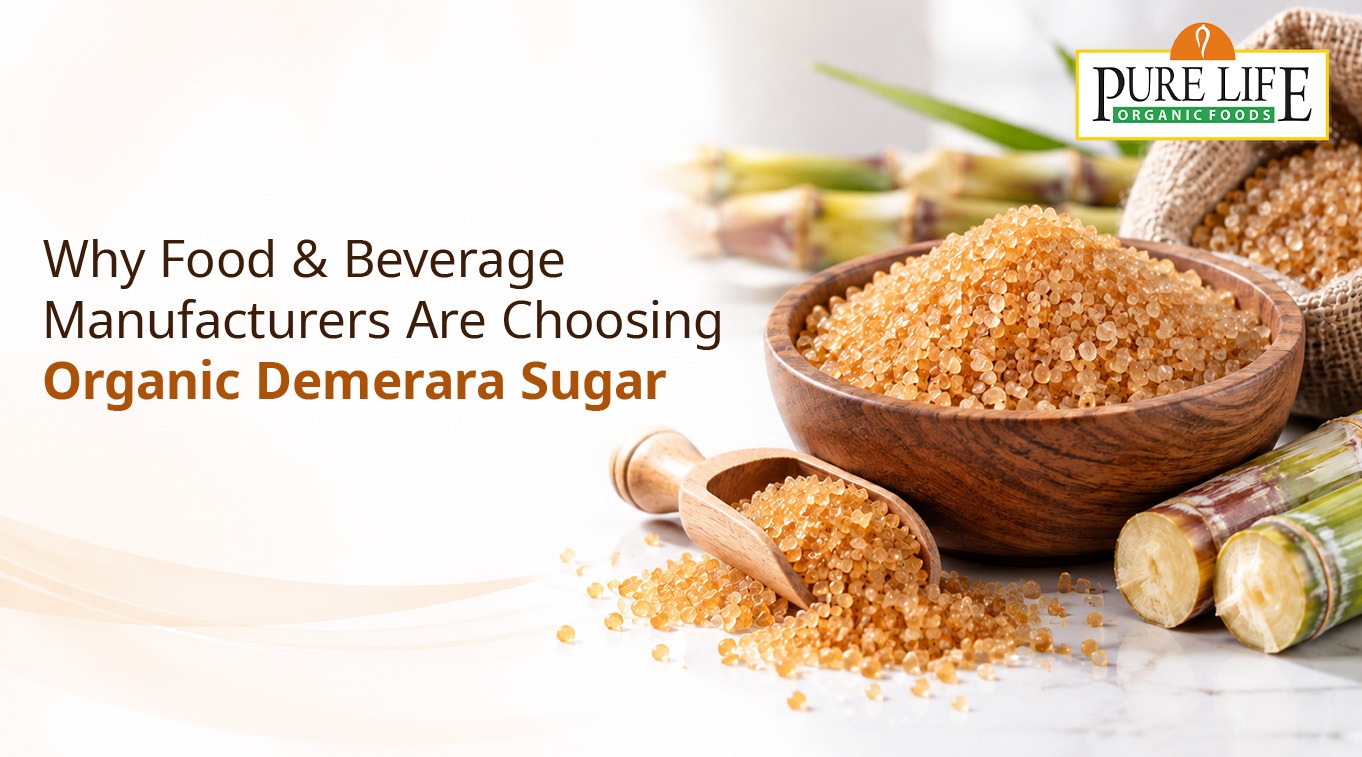
Why Food & Beverage Manufacturers Are Choosing Organic Demerara Sugar
If you run a commercial food or beverage line, you already know that swapping out a core ingredient is a total headache. Nobody changes their sweetener setup just for fun. Every tweak in your formulation means testing texture, recalibrating mixing times, checking shelf stability, and hoping the batch doesn’t clump in the hopper.
Yet, over the last few years, more formulation teams have been ditching standard refined white sugar and liquid corn syrups for Organic Demerara Sugar.
It isn’t just about chasing clean labels either. On a purely mechanical and flavor level, Demerara does things on a production line that standard sugars just can’t pull off.
Here is a breakdown of why this coarse, golden cane sugar is making its way into industrial bakeries, beverage tanks, and sauce facilities, and why where you buy it matters just as much as the sugar itself.
The Actual Physics of the Crystal
The biggest physical difference with Organic Demerara Sugar is crystal size. Standard refined white sugar is ground small so it melts fast. Soft brown sugar is sticky and wet. Demerara sits in a completely different category: it has large, dry, rock-like crystals.
That crystal structure changes how it behaves under heat and pressure.
Take commercial baking. If you are making bulk cookies, muffins, or granola, fine-grain sugars melt away instantly in high-heat industrial ovens. Demerara crystals hold up under thermal stress much longer. They stay intact on top of the dough, giving you a distinct, persistent crunch that doesn’t go soft after three weeks on a grocery store shelf.
Then there is the handling side. Anyone who manages automated dry-dosing equipment knows the nightmare of brown sugar clumping up. Standard brown sugar gets its color from molasses sprayed onto the outside of the crystal, which makes it sticky. Demerara is made differently. The molasses stays locked inside the crystal during crystallization, while the surface is washed dry. You get a golden sugar that flows cleanly through pneumatic tubes and hoppers without bridging or clogging your machinery.
Flavor That Isn’t Just “Sweet”
Refined white sugar gives you pure sweetness, but zero actual taste. On the flip side, heavy brown sugar can overpower delicate recipes with strong, bitter molasses notes.
Demerara hits a sweet spot right in the middle. Because it comes from the initial crystallization of raw sugarcane juice, it carries a subtle, naturally occurring caramel note.
For RTD drinks—like cold brew coffees, bottled iced teas, or botanical sodas—this adds a real layer of depth. It rounds out sharp fruit acids and bitter coffee notes without making the drink taste like syrup.
It acts differently in hot processing, too. In large-scale sauce, glaze, and condiment manufacturing, those natural molasses compounds react fast under heat. They give marinades a deep amber color and rich caramelized finish without needing extra food colorings or artificial flavorings on your ingredient deck.
Why Sourcing Straight From the Manufacturer Matters
Here is the operational reality: you can have the perfect formulation on paper, but if your bulk sugar supplier sends you a different grade every month, your production line will suffer.
A lot of ingredient suppliers are actually middleman brokers. They buy surplus stock from whatever mill is cheapest that week. One month your sugar comes from a facility in South America, the next month from Southeast Asia. For a small kitchen, that might not matter. For an automated factory, slight shifts in moisture or granule size throw off your liquid tank viscosity and blending times.
At Pure Life Organic Foods, we don’t trade paper or flip spot market orders. We operate as a direct, primary manufacturer managing farm-to-fork operations.
Because we run the actual mill, oversee the farming partnerships, and handle the crystallization ourselves, we keep the specs locked in:
- Granule size stays identical: Your automated equipment doesn’t need constant recalibration.
- Moisture levels are strictly controlled: You won’t open a bulk tote only to find a solid block of hardened sugar.
- Organic integrity is guaranteed: We use dedicated processing lines so there’s zero chance of cross-contamination with conventional crops.
Direct Sourcing Makes Audits Painless
When your QA team needs origin records, heavy metal testing, or organic validation for an upcoming audit, working through a broker is a drag. They have to call a distributor, who emails a trader, who finally contacts a mill. It takes weeks.
Dealing straight with Pure Life Organic Foods cuts out the middle layer completely. Because processing and logistics happen under one operational roof, you get clean, transparent paperwork and immediate batch tracking. It keeps your compliance team happy and keeps your production running without shipping delays.
Final Thoughts
At the end of the day, Organic Demerara Sugar gives food and beverage manufacturers a rare mix of functional utility, rich flavor, and clean-label appeal. But to get the consistency your factory floor actually requires, you need a supply chain built on real manufacturing, not broker promises.
Working directly with a producer like Pure Life Organic Foods guarantees that the high-grade sweetener you formulated with is the exact same product delivered to your loading dock, shipment after shipment.